Votre panier
Your cart is empty
Continue shopping
Accueil > Partage technologique > Guide des châssis de drones FPV
Catégorie : Partage technologique | Publié le : 7 sept. 2026 | Mis à jour le : 8 sept. 2026 | Temps de lecture : ~18 min

⚡ Réponse rapide
Un châssis de drone FPV est le squelette en fibre de carbone qui maintient vos moteurs, contrôleur de vol, ESC, caméra, VTX (émetteur vidéo) et batterie. Sa configuration, sa taille et son matériau déterminent le comportement en vol, la résistance aux crashs et la facilité de réparation. Pour la plupart des débutants en 2026 : choisissez un châssis freestyle 5 pouces True-X ou XH avec des bras remplaçables de ≥5 mm, une double fixation stack 30.5×30.5 mm + 20×20 mm, une compatibilité native avec le DJI O4, et des bras de rechange facilement disponibles ; un excellent modèle coûte entre 50 et 100 $. Plus cher ne signifie pas meilleur : un châssis avec des pièces de rechange peu coûteuses est préférable à un châssis haut de gamme que vous ne pouvez pas réparer. Définissez d'abord votre style de vol, puis la taille, et enfin vérifiez la compatibilité, dans cet ordre.
Un châssis de drone FPV constitue l'épine dorsale structurelle du drone — le squelette sur lequel tous les autres composants sont montés et qui protège l'électronique interne, comme le souligne le guide des châssis d'Oscar Liang. Un châssis typique se compose de quatre bras, de plaques supérieure et inférieure, d'un support de caméra, d'entretoises et de boulons — généralement des plaques en fibre de carbone associées à de la visserie métallique.


Ce squelette transporte tout ce qui vole et filme :
Comme le châssis détermine la taille des hélices, la disposition des moteurs, les trous de montage et la protection contre les chocs, c'est la décision initiale qui conditionne le reste de votre montage.
Un châssis remplit cinq fonctions simultanément : il maintient l'alignement des composants, absorbe les chocs, contrôle les vibrations, définit le centre de gravité et détermine le coût futur de vos réparations.


1. Structure et protection. Ce sont les bras qui encaissent les chocs contre les arbres ou le béton. Des bras plus épais répartissent mieux l'impact, et les découpes arrondies résistent bien mieux aux fissures que les angles vifs.
2. Contrôle des vibrations. Des bras souples rendent le drone difficile à régler, créent de l'effet "jello" (oscillations) dans le retour FPV et les images HD, et peuvent même faire surchauffer les moteurs alors que le contrôleur de vol lutte contre les interférences. Un carbone rigide et un montage sur silentblocs du contrôleur protègent le gyroscope.
3. Centre de gravité (CG). La batterie représente 30 à 40 % du poids d'un montage 5 pouces. Sa position est le levier principal du CG : un montage sur le dessus place la masse près du plan des hélices pour une réponse plus nerveuse, tandis qu'un montage en dessous permet un châssis plus profilé.
4. Poids vs Aérodynamisme. Chaque gramme du châssis est du poids mort qui réduit votre autonomie. Les châssis de course sont épurés pour la vitesse ; les châssis freestyle acceptent le poids pour survivre aux crashs.
5. Maintenabilité. Les châssis sont des consommables. Sans bras de rechange vendus séparément, le moindre bras cassé signifie racheter un châssis complet. Les pièces détachées déterminent le coût réel à long terme bien plus que le prix d'achat.
La géométrie définit l'agencement des quatre moteurs par rapport au centre du châssis. C'est le facteur majeur influençant le "ressenti" en vol, via le moment d'inertie, la symétrie de poussée et l'apparition ou non des hélices dans le champ de vision de la caméra.
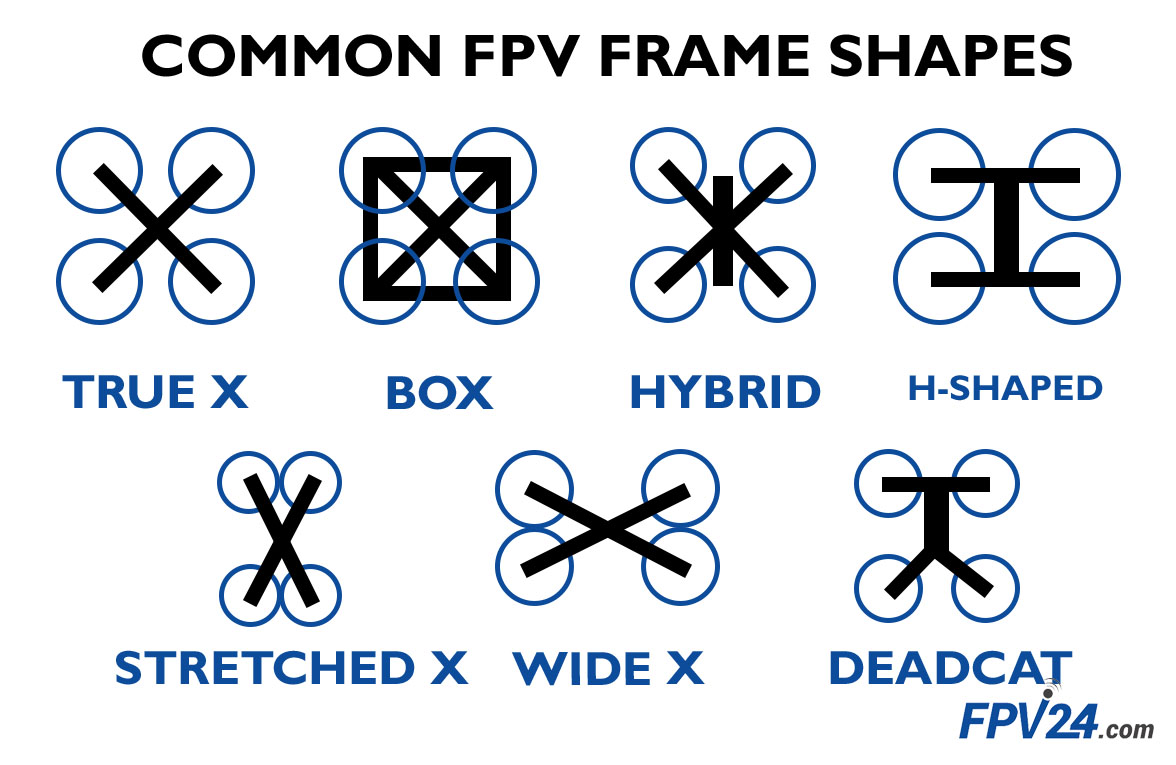

Sur un châssis True-X, les quatre bras se rejoignent au centre avec une distance moteur-centre identique. Le pilotage est neutre, identique en pitch et en roll, ce qui facilite les réglages. Comme la plupart des tutoriels utilisent cette géométrie, c'est ce que nous recommandons pour un premier montage. L'inconvénient : les hélices avant peuvent apparaître dans l'image lors de prises de vues à faible inclinaison.
Un Stretched-X éloigne les bras avant des bras arrière pour que les hélices arrière évoluent dans un flux d'air plus propre (moins de turbulences "prop wash"). L'axe de tangage plus long offre une sensation de stabilité à haute vitesse, dominant la course depuis des années, au prix d'une réactivité légèrement moindre en pitch.
L'inverse : un axe avant-arrière plus court combiné à une grande largeur offre des virages et des changements de direction plus rapides, tandis que la largeur assure la stabilité en roll.
Les châssis Deadcat orientent les bras avant vers l'extérieur et l'arrière (typiquement 30–40°) de sorte que les hélices avant sortent totalement du champ de vision. C'est la seule géométrie garantissant des prises de vue sans hélices, ce qui en fait un essentiel pour les montages cinématographiques DJI O3/O4. Compromis : un léger mixage yaw-roll (compensé par le FC) et les bras avant exposent davantage la caméra lors de chocs frontaux. Notre FlyFishRC Volador II VD5 en est un exemple classique.
Les châssis H placent les bras perpendiculairement à un corps central allongé, offrant une large baie électronique facile à monter. La masse répartie augmente le moment d'inertie — plus stable qu'agile — mais ils restent pertinents pour le long range, les montages GPS ou les charges utiles.
Le XH est la configuration proche du True-X de SpeedyBee — légèrement plus large latéralement qu'en longueur, selon la documentation officielle de SpeedyBee ; en pratique, il s'agit d'un Wide-X léger. XH est un terme spécifique à la marque, pas un standard universel.
Un unibody découpe les bras et la plaque inférieure dans une seule feuille de carbone : plus léger et plus simple, mais en cas de bras cassé, il faut remplacer toute la plaque et déplacer les quatre moteurs. Les bras séparés remplaçables se changent en quelques minutes, et les châssis à bras enserrés sont généralement plus rigides. Pour un débutant qui va crasher, les bras séparés sont gagnants en termes de coût global.
Le montage sur le dessus place le CG près du plan des hélices — virages plus vifs, LiPo protégée — c'est le standard en freestyle. Le montage en dessous permet un châssis plus bas et aérodynamique, privilégié par les pilotes de course. Le montage sur le dessus est le standard freestyle le plus sûr.
La fibre de carbone domine les châssis FPV car elle offre le meilleur rapport rigidité/poids à des prix abordables — légère, rigide, durable et facile à découper. Deux inconvénients importants pour les constructeurs : le carbone est conducteur d'électricité (un fil dénudé touchant le châssis peut causer un court-circuit et détruire des composants), et il atténue les fréquences radio, obligeant à monter les antennes à l'extérieur de la structure.


"T300" et "T700" sont des désignations de grade venant du fabricant de carbone Toray. Le T700 offre une résistance à la traction environ 40 % supérieure (~4 900 MPa contre ~3 530 MPa) et une meilleure résistance à la fatigue pour une rigidité similaire, devenant ainsi la référence pour les châssis freestyle 5 pouces de qualité. Cela dit, d'excellents châssis existent en T300 de qualité (le SpeedyBee Mario 5 en est un), et il est impossible de juger le carbone sur photo — la réputation de la marque et les avis sont vos meilleurs indicateurs.
Pour un châssis 5 pouces, exigez au moins 5 mm d'épaisseur pour les bras ; 6 mm est devenu courant avec la montée en puissance des moteurs. Les classes plus petites utilisent des bras plus fins (3–4 mm pour 3–4″, ~2–2,5 mm pour 2″), tandis que les plaques mesurent couramment 2–3 mm, les bras absorbant l'essentiel des chocs. Pour le freestyle, 5 mm est le minimum requis, ne cherchez pas à économiser du poids ici.
L'aluminium 7075 est utilisé pour les cages de caméra, les têtes et les entretoises — usiné avec précision, il protège parfaitement une caméra numérique coûteuse en cas de choc frontal. Le TPU (polyuréthane thermoplastique) est utilisé pour les pièces flexibles : supports GoPro, supports d'antenne, protections de bras, patins de batterie — pour la protection et l'interface, jamais pour la structure porteuse.
La nouvelle catégorie 2025–2026 mélange le carbone avec des pièces injectées : bras en carbone mélangé du TJRC FJ-5, composants moulés du SpeedyBee Mario 5, et support GoPro injecté du Lumenier QAV-S 2. Les pièces moulées offrent des couleurs constantes, une absorption des chocs accrue et des fonctionnalités intégrées (cartes LED, buzzers) qui nécessitaient auparavant des impressions TPU tierces.
La "taille" d'un châssis correspond à la plus grande hélice qu'il peut supporter ; un "châssis 5 pouces" est donc dimensionné pour des hélices de 5″. Un châssis 5 pouces typique possède un empattement compris entre 180 et 230 mm.


| Classe | Empattement typique | Batterie | Utilisation typique |
|---|---|---|---|
| Tiny Whoop 65/75mm | 65–75 mm | 1S (2S sur 75 mm) | Vol en intérieur, apprentissage sécurisé du vol en mode acro |
| 2 pouces | ~90–120 mm | 1S–2S | Micro drone discret pour jardin |
| 2,5 pouces | ~100–130 mm | 2S–4S | Parcs (moins de 250g), cinewhoops avec O4 |
| 3 / 3,5 pouces | ~120–160 mm | 3S–4S | Freestyle en parc, petits terrains vagues, caméras d'action légères |
| 4 pouces | ~150–180 mm | 3S–4S | Cruising tranquille, long range léger |
| 5 pouces | ~180–230 mm | 4S ou 6S (le 6S est le standard) | La classe polyvalente : freestyle, course, cinématographie avec une GoPro |
| 6 pouces | ~220–260 mm | 4S–6S | Cruising moyen/longue distance |
| 7 pouces | ~280–300 mm | 6S LiPo ou Li-ion | Longue distance, vol en montagne, paysages cinématographiques |
| 8–10 pouces | ~320–430 mm | 6S–12S | Port de charge lourde, cinelifters transportant des caméras de cinéma |
Où se situent les cinewhoops : un cinewhoop est un drone FPV caréné conçu pour voler en toute sécurité à proximité des gens et pour réaliser des prises de vue fluides en intérieur ou à courte portée. Restez sous les 250g en 1,6–2″, transportez une GoPro en 2,5–3″, et choisissez le 3,5″ pour une meilleure résistance au vent en extérieur.
Quelle taille pour un débutant ? Avec de l'espace dégagé et des heures sur simulateur, un 5 pouces est un bon premier montage ; si vous apprenez seul dans votre jardin, un modèle plus petit sera moins cher et plus sûr.
Il n'existe pas de « châssis idéal pour tout faire » — le choix d'un châssis dépend d'une série de contraintes : définissez d'abord votre mission, puis la taille, et enfin vérifiez la compatibilité.


Les châssis freestyle sont construits pour durer : géométrie True-X ou squished-X, bras de 5–6 mm d'épaisseur, un corps plus large permettant d'accueillir un support GoPro et une stack complète, ainsi qu'une batterie montée sur le dessus. Un poids de châssis compris entre 100 et 140g est courant — la durabilité prime sur le poids lors de l'apprentissage, et des bras remplaçables sont quasi indispensables.
Les châssis de course sacrifient tout pour la vitesse : poids minimal (environ 60–85g), profil aérodynamique, géométrie True-X ou Stretched-X, bras plus fins de 4–5 mm et batteries montées en dessous. Il faut s'attendre à ce que les bras cassent — les bras vissés et les pièces de rechange bon marché sont donc essentiels. Si vous ne faites pas de course réelle, un châssis freestyle sera un choix plus durable.
Les châssis cinématographiques sont conçus pour la qualité d'image : géométrie « Deadcat » pour éviter que les hélices n'apparaissent dans le champ, plaque de caméra montée sur silentblocs anti-vibrations, bras rigides de 5–6 mm, espace pour un système numérique et un GPS, ainsi qu'un support GoPro adapté. Le FlyFishRC Volador II VD5 O4 Pro Deadcat (empattement de 225 mm, bras T700 de 6 mm, support anti-jello O4) est construit précisément selon ces spécifications.
Les configurations longue distance sont généralement en 7 pouces : construction plus rigide, support GPS dédié, double emplacement d'antenne et espace pour une grosse batterie 6S. Le DolphinRC Lark X7 (empattement de 322 mm, bras à démontage rapide de 6 mm, disposition pour GPS et double antenne) est un exemple moderne classique.
Le DJI O4 Air Unit Pro a bouleversé la conception des châssis en 2025–2026, car il ne s'adapte physiquement pas aux emplacements prévus pour l'O3 : le module est plus grand (33,5×33,5×13 mm contre 30×30×6 mm pour l'O3), sa caméra mesure 20 mm de large au lieu de 22 mm, et il utilise deux antennes au lieu d'une.
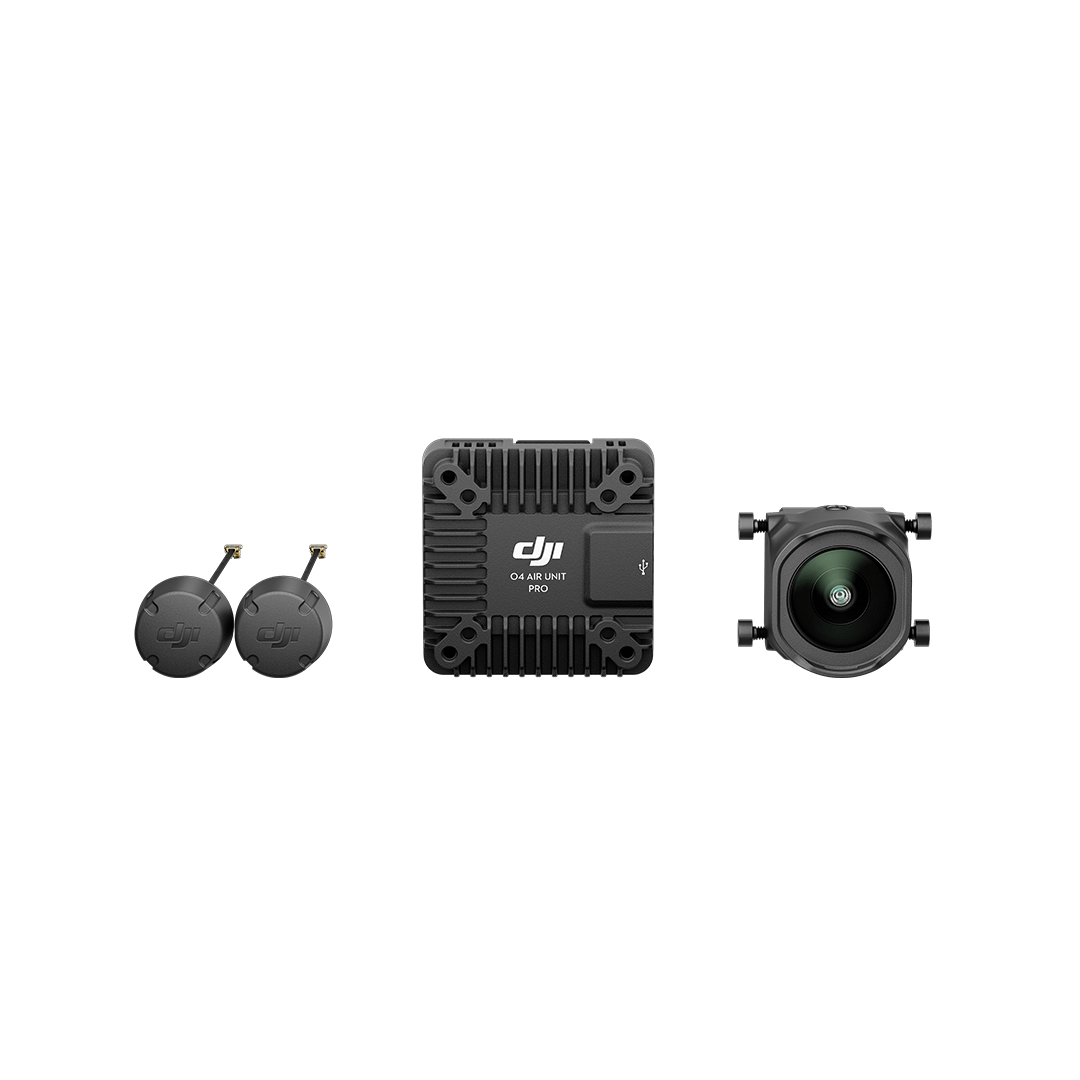

L'industrie a répondu par une mise à jour complète des châssis : le Mark5 O4 Pro de GEPRC a été spécifiquement conçu pour le DJI O4 Air Unit Pro, le QAV-S 2 JohnnyFPV SE de Lumenier est désormais livré avec un kit de mise à niveau O4 Pro, et SpeedyBee commercialise le Mario 5 dans des versions dédiées O4 Advanced et O4 Pro.
⚠️ Règle pour débutant en 2026 : si vous prévoyez de voler avec un DJI O4 Pro, achetez une version de châssis qui le supporte explicitement — la mention « digital ready » ne garantit rien. Acheter un châssis non natif pour O4 en 2026 revient souvent à acheter des fins de stock obsolètes.
Avant d'acheter un châssis, ouvrez sa fiche technique à côté de celle de vos composants et vérifiez chaque ligne ci-dessous — c'est l'étape qui vous évitera des erreurs coûteuses.


| Composant | Standards à respecter | Points à vérifier |
|---|---|---|
| Stack FC / ESC | 30,5×30,5 mm (M3, taille std) · 25,5×25,5 mm (M2, whoop/AIO) · 20×20 mm (mini) | L'entraxe diffère physiquement et ne peut être mélangé sans adaptateurs ; vérifiez aussi la hauteur de dégagement de la stack |
| Moteurs | 5″ : 16×16 mm ou 19×19 mm M3 · micros : 9×9/12×12 M2 | De nombreux châssis 5″ modernes sont percés pour le 16×16 et le 19×19 ; adaptez la longueur des vis à l'épaisseur des bras |
| Caméra FPV | Micro 19 mm · Nano 14 mm · DJI O4 = 20 mm | La taille de la caméra = largeur entre les trous de montage latéraux ; les 20 mm de l'O4 nécessitent des supports spécifiques |
| VTX / Air unit | 20×20 / 25,5×25,5 / 30,5×30,5 mm | Vérifiez les trous et le volume physique — le module O4 Pro est le plus encombrant |
| Antennes | Supports TPU, SMA/u.FL | Montez-les à l'extérieur du carbone (pour éviter les interférences RF) ; les configs longue distance nécessitent deux supports séparés |
| Caméra d'action | Monture type GoPro ou plaque CNC | Les châssis freestyle/cinématographiques en incluent souvent ; les châssis de course rarement |
| Batterie | Fentes de sangle + taille de la base | Vérifiez que votre pack s'insère (ex: 6S 1100mAh sur 5″ ; 6S 4000mAh+ sur 7″) |
Deux pièges méritent d'être soulignés. D'abord, l'erreur classique du débutant est une inadéquation entre les trous de la stack — une stack de 30,5×30,5 mm ne se montera jamais sur un châssis de 25,5×25,5 mm. Ensuite, les châssis n'offrant que des fixations 20×20 mm peuvent forcer un ESC de 30,5 mm à déborder de la structure, l'exposant directement aux chocs lors des crashs et aux coups d'hélices.
La couleur n'est plus seulement une question d'autocollants — en 2026, c'est une catégorie de produits à part entière, les drones FPV étant passés d'outils purement techniques à des objets personnels. Quatre mécanismes grand public permettent cette personnalisation :


La couleur est également fonctionnelle : un châssis vif est plus facile à suivre lors de sessions multi-pilotes, plus facile à retrouver dans les hautes herbes après un crash, et rend bien mieux en photo sur les réseaux sociaux.
Le propre SoarSky J5v2 pousse ce concept plus loin — carbone T700 teinté, effets LED Bluetooth intégrés, support natif DJI O4 Pro / O3, empattement de 235 mm. En septembre 2026, la version rose est en stock à 149,00 $, la bleue est en pré-commande et la violette est temporairement en rupture de stock.
Suivez ces huit étapes dans l'ordre pour éviter la quasi-totalité des échecs d'achat de châssis que nous rencontrons au service après-vente :

⚠️ Erreurs courantes à éviter
La tarification des châssis en 2026 se divise en trois catégories, et le consensus de la communauté place la plupart des châssis de qualité correcte dans la fourchette de 75 à 100 $.


Moins de 50 $ — débutant et micro. Le Sub250 Nanofly20 (14,99 $) est un châssis de 2 pouces de 8,4 g avec un empattement de 88 mm — le moyen le moins coûteux d'apprendre à monter un drone. Au sommet de cette catégorie, le SpeedyBee Mario 5 (à partir de 49,99 $) intègre des bras de 6 mm, une tête de caméra en aluminium, et une géométrie DC ou XH dans des variantes dédiées O4 Advanced et O4 Pro.
50–100 $ — le juste milieu. Carbone T700, kits TPU complets, support O4 natif. Le FlyFishRC Volador II VD5 O4 Pro Deadcat (89,99 $) est notre choix pour le cinématique ; le TJRC FJ-5 (89,99 $) est le choix style, avec une construction moulée par injection mélangée à du carbone et quatre couleurs en stock.
100 $+ — haut de gamme et longue portée. Le DolphinRC Lark X7 (104,99 $) apporte une capacité longue portée de 7 pouces avec des bras à dégagement rapide de 6 mm et un agencement pour GPS. Le Lumenier QAV-S 2 JohnnyFPV SE (109,99 $) est la référence 5 pouces haut de gamme : bras de 6 mm, rétention de bras pliable X-Lock, protection de caméra en aluminium.
Les six modèles, avec leurs prix en temps réel, se trouvent dans la section Où acheter ci-dessous.

✅ Note de transparence de l'éditeur : cette section reflète le point de vue de l'équipe éditoriale de SoarSky, compilé à partir de la documentation des fabricants, des retours de la communauté (Reddit r/fpv, IntoFPV) et de notre propre expérience de vente et de service après-vente concernant les châssis que nous avons en stock. Il ne s'agit pas d'une collection d'avis clients, et nous ne citons pas de chiffres de tests inventés.
Pour un premier quad polyvalent en extérieur, un châssis freestyle de 5 pouces dispose du plus grand nombre de tutoriels et de pièces de rechange. Pour apprendre seul ou dans un petit espace, commencez avec un tiny whoop de 65–75 mm ou un quad de 2 à 3,5 pouces — le coût des crashs augmente avec la taille.
Non. L'O4 Air Unit Pro est plus grand que l'O3 (33,5×33,5×13 mm contre 30×30×6 mm), sa caméra mesure 20 mm de large et il utilise deux antennes. Achetez une variante de châssis qui mentionne explicitement le support de l'O4 Pro.
Non — l'espacement des trous est physiquement différent. Certains châssis prennent en charge plusieurs formats ou acceptent des plaques d'adaptation, mais vérifiez toujours les spécifications de montage de l'électronique du châssis en premier.
Bras remplaçables. Les châssis monoblocs sont plus légers, mais un bras cassé signifie remplacer toute la plaque inférieure et déplacer tous les moteurs ; les bras séparés se changent en quelques minutes, et les châssis à bras enserrés sont généralement plus rigides.
Au moins 5 mm pour le freestyle ; 6 mm est de plus en plus courant. Des bras plus fins fléchissent — et la flexion se traduit par des problèmes de réglage, de "jello" et des moteurs qui chauffent, pas seulement par des casses.
Non. Les tests de la communauté ont montré que des châssis coûteux sont parfois trop souples pour conserver un bon réglage, tandis que des modèles éprouvés à 30 $ volent à merveille. Payez pour la qualité du carbone, la conception des bras, la compatibilité O4 et la disponibilité des pièces de rechange — pas pour un logo.
Oui — le carbone bloque/atténue les fréquences radio et conduit l'électricité. Montez les antennes à l'extérieur de la structure en carbone et isolez tout câblage susceptible de toucher le châssis.
Les six châssis ci-dessous sont en stock chez SoarSky en septembre 2026, avec des prix issus de notre boutique en ligne. Vous ne savez pas si votre électronique, votre caméra ou votre VTX est compatible ? Contactez-nous — adapter les pièces aux châssis est notre spécialité quotidienne.
Kit châssis Sub250 Nanofly20 — Meilleur premier build micro
Châssis 2 pouces de 8,4 g, empattement de 88 mm avec montage AIO 25,5×25,5 mm. Le moyen le plus économique d'apprendre à monter — les crashs ne coûtent presque rien.
14,99 $ · En stock
Acheter maintenantChâssis SpeedyBee Mario 5 — Meilleur rapport qualité-prix 5 pouces O4
Bras T300 3K de 6 mm, tête de caméra en aluminium aéronautique, support GoPro encastré. Quatre variantes : géométrie DC ou XH × supports O4 Advanced (49,99 $) ou O4 Pro (59,99 $).
À partir de 49,99 $ · 4 variantes · En stock
Acheter maintenantFlyFishRC Volador II VD5 O4 Pro Deadcat — Choix cinématique
Deadcat avec empattement de 225 mm, bras T700 de 6 mm, plaques de caméra en aluminium CNC et support O4 anti-jello. Les hélices restent totalement hors champ.
89,99 $ · En stock
Acheter maintenantTJRC FJ-5 — Choix personnalité et couleurs
Châssis 5 pouces moulé par injection mélangé à du carbone avec éclairage des bras par fibre optique, carte LED Bluetooth, plaque GoPro et support GPS. Empattement 215 mm, montage électronique 30,5×30,5 mm.
89,99 $ · Or / Rose / Bleu / Noir · Toutes couleurs en stock
Acheter maintenant
DolphinRC Lark X7 — 7 pouces longue portée / Cinématique
Empattement 322 mm, 388 g, bras 6 mm à dégagement rapide, cage de caméra tout aluminium, agencement GPS et double antenne, module Bluetooth RGB.
104,99 $ · + bundle câble coaxial 250 mm 115,99 $ · En stock
Acheter maintenant
Lumenier QAV-S 2 JohnnyFPV SE — 5 pouces premium
133 g avec bras 6 mm, rétention de bras pliables à une vis X-Lock, protection de caméra en aluminium, support GoPro moulé par injection et visserie anodisée bronze doré.
109,99 $ · En stock
Acheter maintenant🛒 Parcourir tous les châssis FPV chez SoarSky
Copyright : Contenu original par SoarSky — merci de citer la source lors du partage. | Divulgation : Les prix et les stocks sont sujets à modification selon la page produit. | Publié : 7 septembre 2026 | Dernière mise à jour : 8 septembre 2026
Tags : châssis drone FPV, châssis 5 pouces, SpeedyBee Mario 5, FlyFishRC Volador II VD5, TJRC FJ-5, DolphinRC Lark X7, Lumenier QAV-S 2, châssis DJI O4, châssis freestyle, châssis deadcat, SoarSky


