Your cart
Your cart is empty
Continue shopping


Home > Technology Sharing > FPV Drone Frame Guide
Category: Technology Sharing | Published: Sep 7, 2026 | Updated: Sep 8, 2026 | Reading time: ~18 min

⚡ Quick Answer
An FPV drone frame is the carbon-fiber skeleton that holds your motors, flight controller, ESC, camera, VTX (video transmitter), and battery — and its layout, size, and material decide how the drone flies, crashes, and gets repaired. For most beginners in 2026: choose a 5-inch True-X or XH freestyle frame with ≥5mm replaceable arms, 30.5×30.5mm + 20×20mm stack mounting, native DJI O4 support, and available spare arms; $50–100 buys an excellent one. Expensive ≠ better — a frame with cheap spares beats a premium frame you can't repair. Decide your flying style first, then size, then check compatibility, in that order.
An FPV drone frame is the structural backbone of the drone — the skeleton on which all other components are mounted and which protects the electronics inside, as Oscar Liang's frame guide puts it. A typical frame consists of four arms, top and bottom plates, a camera mount, standoffs, and bolts — usually carbon-fiber plates plus metal hardware.


That skeleton carries everything that flies and films:
Because the frame dictates prop size, motor layout, mounting holes, and crash protection, it's the one decision that locks in the rest of your build.
A frame does five jobs at once: it holds components in alignment, absorbs crashes, controls vibration, sets the center of gravity, and determines how cheap your repairs will be.


1. Structure and crash protection. The arms hit trees and concrete first. Thicker arms spread impact stress over a wider area, and rounded arm cutouts resist cracking far better than hard angles.
2. Vibration control. Flexing arms make a quad hard to tune, cause "jello" (wobbling) in your FPV feed and HD footage, and can even overheat motors as the flight controller fights the noise. Stiff carbon, plates that sandwich the arms, and rubber-grommet soft-mounting of the FC all protect the gyro.
3. Center of gravity (CG). The battery is 30–40% of a 5-inch build's weight, so where the frame mounts it is the biggest CG lever — top-mount puts mass near the propeller plane for sharper response; bottom-mount allows a lower, sleeker frame.
4. Weight vs. aerodynamics. Every gram of frame is payload or flight time you give up. Race frames strip material for speed; freestyle frames accept weight to survive crashes.
5. Serviceability. Frames are consumables. Without separately sold spare arms, one broken arm means a whole new frame — spares drive your real long-term cost more than the sticker price.
Layout (geometry) is the arrangement of the four motors relative to the frame's center, and it's the biggest factor in how a drone "feels" — it works through the moment of inertia, thrust symmetry, and whether props appear in your camera view.
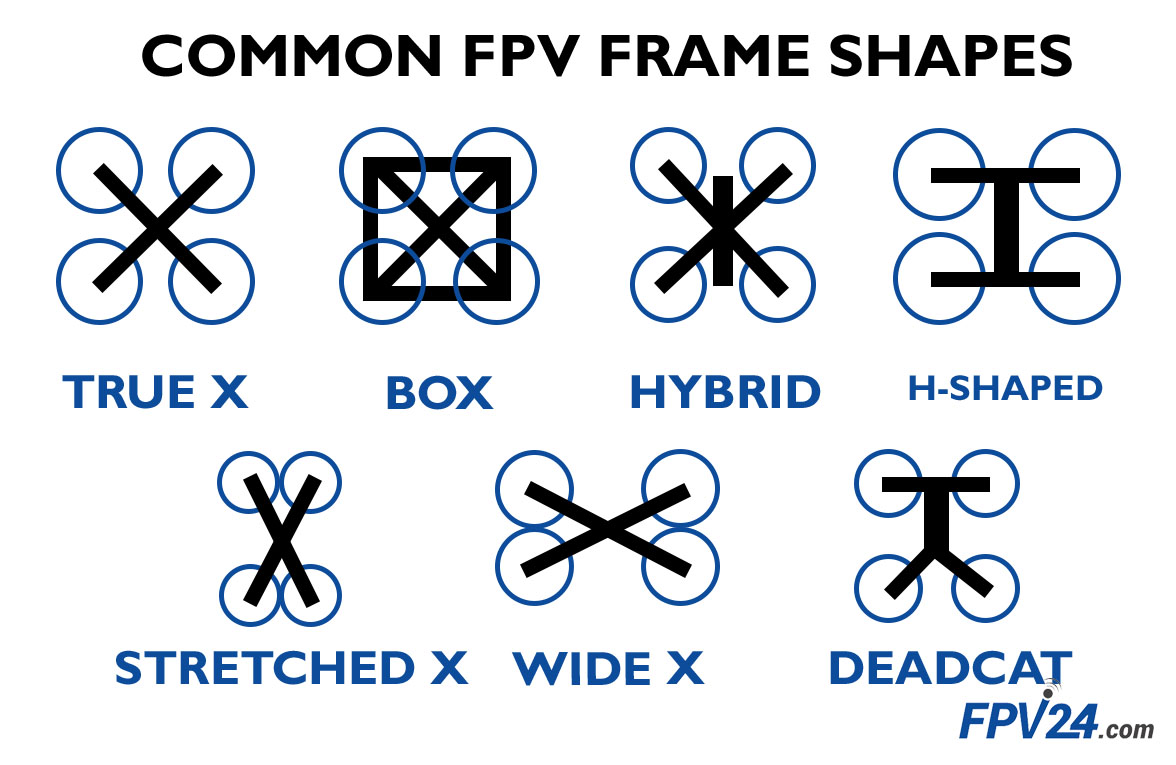

On a True-X frame all four arms meet at the center with equal motor-to-center distance. Handling is neutral and identical on pitch and roll, making True-X the easiest geometry to tune — and since nearly every tutorial assumes it, it's what we recommend for a first build. The downside: front props can creep into the shot at low camera angles.
A Stretched-X pushes the front and rear arms farther apart so the rear props spin in cleaner air (less "prop wash" turbulence). The longer pitch axis feels planted at speed and has dominated racing for years, at the cost of slightly less snappy pitch.
The mirror image: a shorter front-to-back axis with a wide stance gives faster flips and direction changes while the width keeps rolls stable.
Deadcat frames sweep the front arms outward and back (typically 30–40°) so the front props fall completely outside the camera's view — the only geometry that guarantees prop-free footage, which made it essential for DJI O3/O4 cinematic builds. Trade-offs: slight yaw-roll mixing (the FC compensates), and front-protruding arms expose the camera more in head-on crashes. Our FlyFishRC Volador II VD5 is a textbook example.
H frames run the arms perpendicular to a long central body, giving a huge, easy-to-build electronics bay. The spread-out mass raises the moment of inertia — stable rather than agile — but they remain relevant for long-range, GPS-heavy, and payload builds.
XH is SpeedyBee's near-True-X layout — slightly wider left-to-right than front-to-back, per SpeedyBee's official documentation; in practice, a mild wide-X. XH is a brand-specific term, not a universal standard.
A unibody cuts arms and bottom plate from one carbon sheet: lighter and simpler, but one broken arm means replacing the whole plate and moving all four motors. Separate replaceable arms swap in minutes, and sandwiched-arm frames are generally stiffer. For a learner who will crash, separate arms win on total cost.
Top-mounting puts the CG near the prop plane — sharper cornering, protected LiPo — and is the freestyle standard. Bottom-mounting allows a lower, more aerodynamic frame that racers prefer. Top-mount is the safer freestyle default.
Carbon fiber dominates FPV frames because it offers the best stiffness-to-weight ratio at hobby prices — light, rigid, durable, and easy to cut. Two downsides matter to builders: carbon is electrically conductive (an exposed wire touching the frame can short and kill components), and it attenuates radio frequencies, so antennas always mount outside the structure.


"T300" and "T700" are grade designations originally from carbon manufacturer Toray. T700 offers roughly 40% higher tensile strength (~4,900 MPa vs ~3,530 MPa) and better fatigue life at similar stiffness, and has become the baseline for quality 5-inch freestyle frames. That said, excellent frames exist in quality T300 (the SpeedyBee Mario 5 is one), and you cannot judge carbon from photos — brand reputation and reviews are your proxies.
For a 5-inch frame, insist on at least 5mm arms; 6mm has become common as motors have grown more powerful. Smaller classes run thinner (3–4mm on 3–4″, ~2–2.5mm on 2″), while plates are commonly 2–3mm since arms take the crash loads. For freestyle, 5mm is the floor, not a place to save weight.
7075 aluminum appears in camera cages, heads, and standoffs — precisely machined and great at protecting an expensive digital camera in a head-on hit. TPU (thermoplastic polyurethane) handles the flexible parts: GoPro soft-mounts, antenna holders, arm guards, battery pads — protection and interfaces, never load-bearing structure.
The newest 2025–2026 category mixes carbon with injection-molded parts: the TJRC FJ-5's carbon-mixed molded arms, the SpeedyBee Mario 5's molded components, and the Lumenier QAV-S 2's injection-molded GoPro mount. Molded parts deliver consistent color, extra crash absorption, and integrated features (LED boards, buzzers) that used to require third-party TPU prints.
Frame "size" is the largest prop it supports, so a "5-inch frame" means a frame sized for 5″ props. A typical 5-inch frame has a wheelbase of roughly 180–230mm.


| Class | Typical wheelbase | Battery | Typical use |
|---|---|---|---|
| 65/75mm Tiny Whoop | 65–75mm | 1S (2S on 75mm) | Indoor flying, learning acro safely |
| 2 inch | ~90–120mm | 1S–2S | Quiet backyard micro |
| 2.5 inch | ~100–130mm | 2S–4S | Sub-250g parks, cinewhoops with O4 |
| 3 / 3.5 inch | ~120–160mm | 3S–4S | Park freestyle, small bandos, light action cams |
| 4 inch | ~150–180mm | 3S–4S | Quiet cruising, light long range |
| 5 inch | ~180–230mm | 4S or 6S (6S is the standard) | The do-everything class: freestyle, racing, cinematic with a GoPro |
| 6 inch | ~220–260mm | 4S–6S | Medium/long-range cruising |
| 7 inch | ~280–300mm | 6S LiPo or Li-ion | Long range, mountain surfing, cinematic landscapes |
| 8–10 inch | ~320–430mm | 6S–12S | Heavy lift, cinelifters carrying cinema cameras |
Where cinewhoops fit: a cinewhoop is a ducted FPV drone built for safe flying near people and smooth close-proximity footage. Stay under 250g at 1.6–2″, carry a GoPro at 2.5–3″, choose 3.5″ for outdoor wind.
Which size for a beginner? With open space and simulator hours, 5-inch is a fine first build; learning alone in a backyard, smaller is cheaper and safer.
There is no "best frame for everything" — frame selection is a constraint chain: define the mission first, then the size, then verify compatibility.


Freestyle frames are built to survive: True-X or squished-X geometry, 5–6mm arms, a wider body with room for a GoPro mount and full stack, and a top-mounted battery. A 100–140g frame weight is normal — durability beats grams when learning, and replaceable arms are close to mandatory.
Race frames sacrifice everything for speed: minimal weight (roughly 60–85g), low-drag profile, True-X or Stretched-X geometry, thinner 4–5mm arms, and bottom-mounted batteries. Arms are expected to break — so bolt-on arms and cheap spares matter even more. If you don't actually race, a freestyle frame is the more durable choice.
Cinematic frames are designed around footage quality: Deadcat geometry to keep props out of shot, a soft-mounted anti-vibration camera plate, rigid 5–6mm arms, room for a digital air unit plus GPS, and a proper GoPro mount. The FlyFishRC Volador II VD5 O4 Pro Deadcat (225mm wheelbase, 6mm T700 arms, anti-jello O4 mount) is built exactly to this brief.
Long-range rigs are usually 7-inch: stiffer construction, a dedicated GPS mount, dual antenna placement, and space for a big 6S pack. The DolphinRC Lark X7 (322mm wheelbase, 6mm quick-release arms, GPS and dual-antenna layout) is a typical modern example.
The DJI O4 Air Unit Pro changed frame design in 2025–2026 because it does not physically fit where an O3 used to: the module is larger (33.5×33.5×13mm vs the O3's 30×30×6mm), its camera is 20mm wide versus the O3's 22mm, and it runs two antennas instead of one.
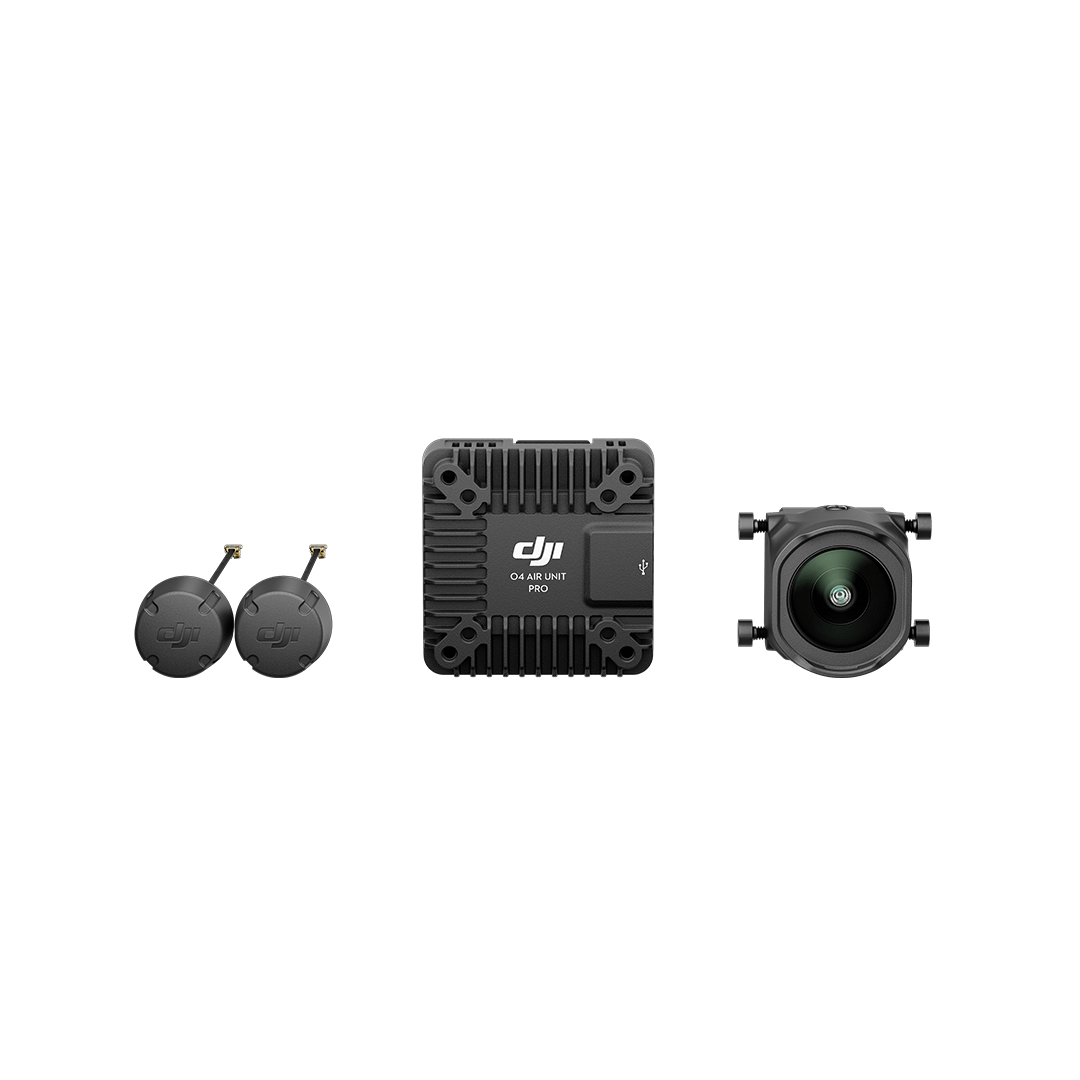

The industry responded with a full frame refresh: GEPRC's Mark5 O4 Pro was designed specifically for the DJI O4 Air Unit Pro, Lumenier's QAV-S 2 JohnnyFPV SE now ships with an O4 Pro upgrade kit, and SpeedyBee sells the Mario 5 in dedicated O4 Advanced and O4 Pro variants.
⚠️ Beginner rule for 2026: if you plan to fly a DJI O4 Pro, buy a frame variant that explicitly supports it — a "digital ready" product title guarantees nothing. Buying a non-O4-native frame in 2026 often means buying the tail end of old stock.
Before buying any frame, open its spec sheet next to your components' spec sheets and verify every row below — this is the part that saves money.


| Component | Standards to match | What to check |
|---|---|---|
| FC / ESC stack | 30.5×30.5mm (M3, full size) · 25.5×25.5mm (M2, whoop/AIO) · 20×20mm (mini) | Hole spacing is physically different and can't be mixed without adapters; check stack height clearance too |
| Motors | 5″: 16×16mm or 19×19mm M3 · micros: 9×9/12×12 M2 | Many modern 5″ frames drill both 16×16 and 19×19; match screw length to arm thickness |
| FPV camera | Micro 19mm · Nano 14mm · DJI O4 = 20mm | Camera size = width between side mounting holes; the O4's 20mm needs O4-specific mounts |
| VTX / air unit | 20×20 / 25.5×25.5 / 30.5×30.5mm | Check holes and physical volume — the O4 Pro module is the biggest common unit |
| Antennas | TPU holders, SMA/u.FL | Mount outside the carbon (RF blocking); long-range rigs want dual separated mounts |
| Action camera | GoPro-pattern mount or CNC plate | Freestyle/cinematic frames usually include one; race frames often don't |
| Battery | Strap slots + pad size | Confirm your pack fits (e.g., 6S 1100mAh on 5″; 6S 4000mAh+ on 7″) |
Two traps deserve emphasis. First, the classic beginner mistake is a stack-pattern mismatch — a 30.5×30.5mm stack will never bolt into a 25.5×25.5mm frame. Second, frames offering only 20×20mm mounting can force a 30.5mm ESC to overhang the frame's waist, where it takes prop strikes and crash hits directly.
Color is no longer an aftermarket decal — in 2026 it's a product category, as FPV drones shifted from pure tools to personal gear. Four mainstream mechanisms deliver it:


Color is functional too: a bright frame is easier to track at multi-pilot sessions, easier to find in tall grass after a crash, and photographs far better for social media.
SoarSky's own SoarSky J5v2 takes this furthest — dyed-color T700 carbon, integrated Bluetooth LED effects, native DJI O4 Pro / O3 support, 235mm wheelbase per product specs. As of September 2026 the Pink version is in stock at $149.00, Blue is on pre-order, and Purple is temporarily sold out.
Follow these eight steps in order and you'll avoid nearly every frame-buying failure we see in after-sales support:

⚠️ Common mistakes to avoid
Frame pricing in 2026 falls into three tiers, and community consensus puts most decent frames in the $75–100 band.


Under $50 — starter and micro. The Sub250 Nanofly20 ($14.99) is an 8.4g, 88mm-wheelbase 2-inch frame — the cheapest way to learn building. At the top of the tier, the SpeedyBee Mario 5 (from $49.99) packs 6mm arms, an aluminum camera head, and DC or XH geometry in dedicated O4 Advanced and O4 Pro variants.
$50–100 — the sweet spot. T700 carbon, full TPU kits, native O4 support. The FlyFishRC Volador II VD5 O4 Pro Deadcat ($89.99) is our cinematic pick; the TJRC FJ-5 ($89.99) is the style pick, with carbon-mixed injection-molded construction and four colors in stock.
$100+ — premium and long-range. The DolphinRC Lark X7 ($104.99) brings 7-inch long-range capability with quick-release 6mm arms and GPS layout. The Lumenier QAV-S 2 JohnnyFPV SE ($109.99) is the high-end 5-inch benchmark: 6mm arms, X-Lock folding arm retention, aluminum camera protection.
All six, with live pricing, are in the Where to Buy section below.

✅ Editor's transparency note: this section reflects the SoarSky editorial team's perspective, compiled from manufacturer documentation, community feedback (Reddit r/fpv, IntoFPV), and our own sales and after-sales experience with the frames we stock. It is not a collection of customer reviews, and we do not quote invented test numbers.
For one outdoor do-everything quad, a 5-inch freestyle frame has the most tutorials and spare parts. Learning alone or in a small space, start with a 65–75mm tiny whoop or a 2–3.5″ quad — crash costs scale with size.
No. The O4 Air Unit Pro is larger than the O3 (33.5×33.5×13mm vs 30×30×6mm), its camera is 20mm wide, and it uses two antennas. Buy a frame variant that explicitly lists O4 Pro support.
No — the hole spacing is physically different. Some frames support multiple patterns or accept adapter plates, but always check the frame's stack mounting spec first.
Replaceable arms. Unibody frames are lighter, but one broken arm means replacing the whole bottom plate and moving all motors; separate arms swap in minutes, and sandwiched-arm frames are generally stiffer too.
At least 5mm for freestyle; 6mm is increasingly common. Thinner arms flex — and flex shows up as tuning problems, jello, and hot motors, not just breaks.
No. Community testing has found pricey frames too flexy to hold a tune while proven $30 designs fly beautifully. Pay for carbon quality, arm design, O4 compatibility, and spare-parts availability — not a logo.
Yes — carbon blocks/attenuates radio frequencies and conducts electricity. Mount antennas outside the carbon structure and insulate any wiring that could touch the frame.
All six frames below are in stock at SoarSky as of September 2026, with prices from our live store. Unsure whether your stack, camera, or VTX fits? Contact us — matching parts to frames is what we do all day.
Sub250 Nanofly20 Frame Kit — Best First Micro Build
8.4g, 88mm wheelbase 2-inch frame with 25.5×25.5mm AIO mounting. The cheapest way to learn building — crashes cost almost nothing.
$14.99 · In stock
Buy NowSpeedyBee Mario 5 Frame — Best Value 5-Inch O4 Frame
6mm T300 3K arms, aviation aluminum camera head, recessed GoPro mount. Four variants: DC or XH geometry × O4 Advanced ($49.99) or O4 Pro ($59.99) mounts.
$49.99+ · 4 variants · In stock
Buy NowFlyFishRC Volador II VD5 O4 Pro Deadcat — Cinematic Pick
225mm wheelbase deadcat with 6mm T700 arms, CNC aluminum camera plates, and an anti-jello O4 mount. Props stay fully out of shot.
$89.99 · In stock
Buy NowTJRC FJ-5 — Colorful Personality Pick
Carbon-mixed injection-molded 5-inch frame with fiber-optic arm lighting, Bluetooth LED board, GoPro plate and GPS bracket. 215mm wheelbase, 30.5×30.5mm stack mounting.
$89.99 · Gold / Pink / Blue / Black · All colors in stock
Buy Now
DolphinRC Lark X7 — 7-Inch Long-Range / Cinematic
322mm wheelbase, 388g, quick-release 6mm arms, full aluminum camera cage, GPS and dual-antenna layout, Bluetooth RGB module.
$104.99 · +250mm coaxial cable bundle $115.99 · In stock
Buy Now
Lumenier QAV-S 2 JohnnyFPV SE — Premium 5-Inch
133g with 6mm arms, X-Lock one-screw folding arm retention, aluminum camera protection, injection-molded GoPro mount, and bronze-gold anodized hardware.
$109.99 · In stock
Buy Now🛒 Browse All FPV Frames at SoarSky
Copyright: Original content by SoarSky — please credit the source when sharing. | Disclosure: Prices and stock are subject to the live product page. | Published: September 7, 2026 | Last Updated: September 8, 2026
Tags: FPV drone frame, 5 inch frame, SpeedyBee Mario 5, FlyFishRC Volador II VD5, TJRC FJ-5, DolphinRC Lark X7, Lumenier QAV-S 2, DJI O4 frame, freestyle frame, deadcat frame, SoarSky


